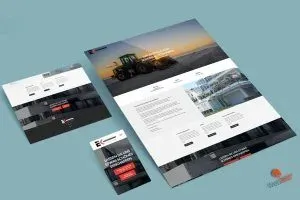








No other aspect of marketing is more important than a high-quality website, which is the front door of your business. A “good” website isn't enough to turn people into customers and brand ambassadors. What you really need is a great website.
Thousands of ready-made templates and designs make building a website child's play – if all you want is a simple, ready-made website that looks professional enough to give your business a basic start. But to stand out in today's competitive landscape, you need a website that is as unique as your business itself.
So what makes a website great?
1. Well designed and functional
Your website reflects your business, your products, your services and ultimately your brand. It's therefore important that it is visually appealing, elegant and professional. Allow for white space and clean layouts with high-quality photos and graphics, and let your message shine through. (See examples.)
Just as important is that the website works quickly, correctly and as expected. Build it to web standards, proofread it thoroughly and test it regularly for speed or functionality problems. Make it accessible. Every page should always be fast and functional, because any one of them could be a potential customer's first or only impression. Broken, slow or poorly structured areas frustrate your visitors and make them leave the site.
Groombridge Wu, a legal innovator, designed and built a website to support the rapid growth of a firm working at the intersection of science and law.
2. Easy to use
Website visitors are always in a hurry. Don't make them search for information. User experience (UX) plays a key role in helping visitors use and understand your website and stay on it. Create obvious, logical navigation with a clear hierarchy. Use consistent layouts and visual cues for functionality across the whole site.
Your website should satisfy both “searchers” who are looking for something specific and “browsers” who are just looking around. Help users complete their tasks quickly with on-site search, and keep them engaged by suggesting related content and minimising dead ends.
3. Optimised for mobile devices
There are no more excuses today. Your website must look and work well on every platform. The growth of mobile and tablet devices isn't slowing down, and you simply don't know what your next visitor will use. Optimising for mobile devices improves both your visitors' experience and your SEO rankings.
The National Residency Matching Program is a fully mobile-optimised website supporting the annual medical residency application process in the USA and elsewhere.
4. Fresh, high-quality content
Be concise, interesting and new. Use language that makes sense to your audience – avoid jargon, corporate speak and acronyms. Explain your “why”. Visitors have a short attention span: correct spelling, accuracy, relevance and regular updates. Blogs and social media updates are great ways to add fresh content that brings visitors back and supports your SEO strategy. Yes, keeping things fresh takes a little investment. No, you can't do without it.
5. Easily accessible contact details and location
Your audience won't chase after you. Make it easy to get in touch with you and offer several points of contact: phone, email, social media and perhaps a user-friendly contact form. A Google map is a bonus. Above all, make sure this information is available on a contact page that is easy to find – if not on every page of your website.
6. Clear calls to action
If your website doesn't ask visitors for anything, they certainly won't do anything. What is the purpose of your website? Is that purpose clear to visitors? Even informational sites want visitors to read and share articles, follow the company on social media, download toolkits, join mailing lists or learn more about the organisation. Include a call to action on every page.
7. Optimised for search and the social web
It's not enough to create a good-looking website that is easy to use. It has to generate traffic. Otherwise all the effort put into design, UX and content development would be in vain. There are hundreds of rules and guidelines for effective search engine optimisation, so here are a few to get you started:
- Use page titles and meta tags on every page, and alt tags on every image.
- Optimise the content of your site so that it matches the words real people search for.
- Use keywords sensibly in your content and links.
- Use Cascading Style Sheets for the layout and keep your HTML code clean.
Make it as easy as possible for visitors to share your content. Social networks can generate a lot of traffic and have a positive effect on your search ranking. Don't forget the obvious sharing links (even if they are rarely used in practice).